Below, you will find a small selection of the 2010 entries, together with the images that inspired them. You can read all the successful pieces in Poets Meet Painters (Beara Writers’ Group and Mill Cove Gallery, 2010)—copies are available, price €4 including postage, via the publications page.
Disengaged
by Jean Finn
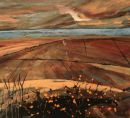
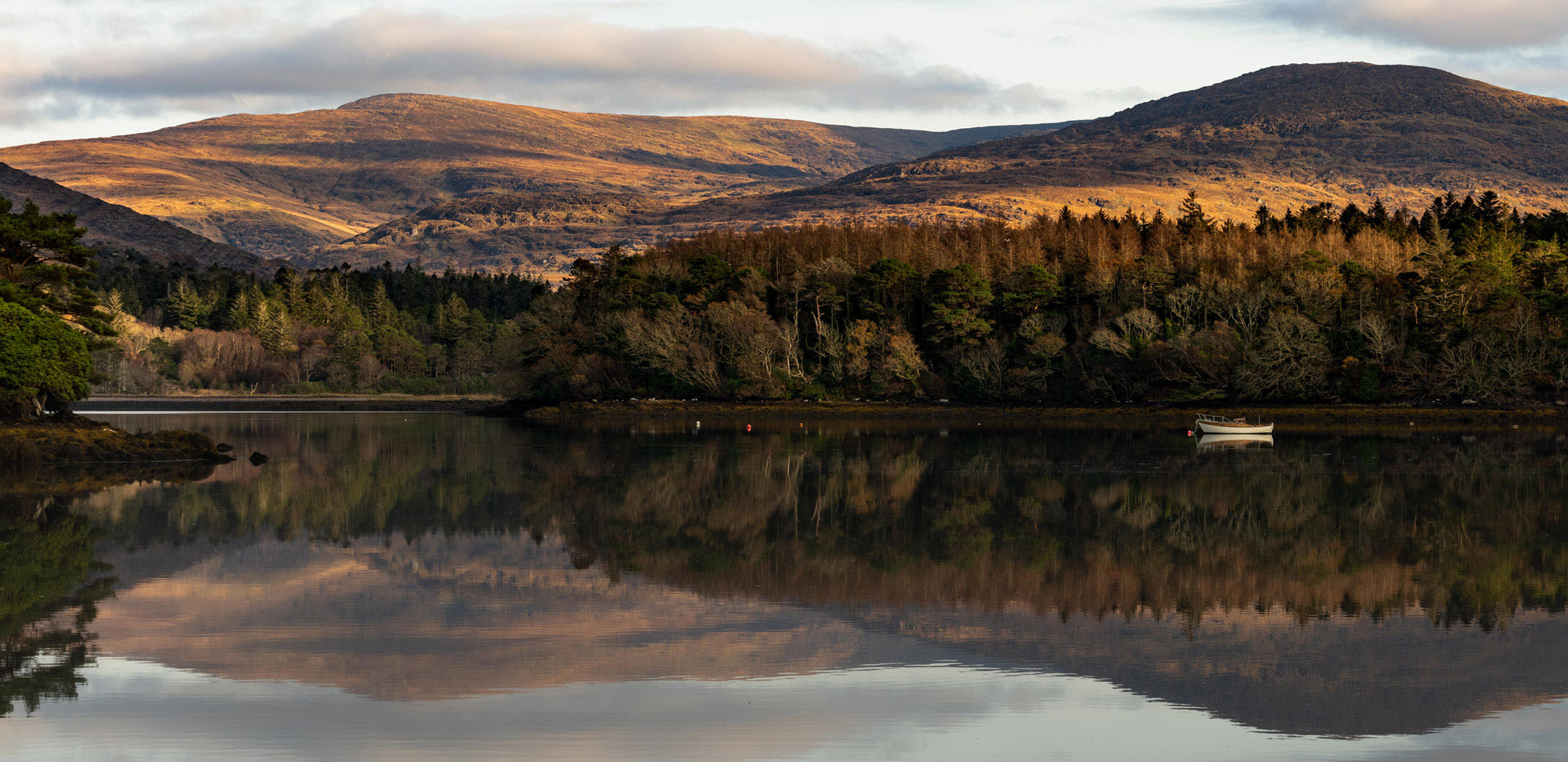
Exploding clouds above Mill Cove
The rainman's out
Reaching his skinny arms
Towards a cumulous sky
Large drops plop heavily
Onto a glutted pond
Fat head sits
Snug in his ground perch
Sighlessly listening
Dripping trees
Water his naked skull
The rain man dances
His merry dance
Summer is threatened with extinction
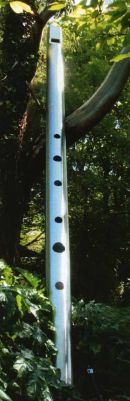
Still you rest your silvery body
disengaged and aloof
Idly leaning
Into the spare arm of an aboriginal tree
Come off your useless perch
And accompany the rainman's dance
Smooth surfaced instrument
Holed from stem to stern
Explain yourself
Does the wind ever whistle
Through your body
While the rest of us are sleeping
Or at the pub
Listening to the real thing
Accompanied by a badly played guitar
You are the ugliest of instruments
Good for the seán nós mind you
Or in the hands of Mary Burgin
Capable of causing toes to tap
and Muscovites to swing
A tinny sound at times
Sometimes a squawking screech
Perhaps it's best you stay silently
Languishing in your bower
Where frequently
Rainwater pours and washes you inside out
Inspired by 'Tin Whistle' by Redmond Herrity
Performance
by Jennifer Russell
The stage was set
I was spare and unblemished
A DNA copy
One of us, one of them
I covered up the snags
Blue suits for the show
Lipstick and blusher
I learned how
Now I go to the matinees
Like the others
Sit in the gallery
Plain face free of colour
Hands folded back
The season goes on and on
I have done my small turn
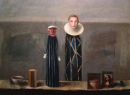
Inspired by Performance by Ian Humphreys
Memories of Seán Óg
by John Baylis Post
The long, strong boundaries are the old bones of the land from prosperous days, boulder-built and broad, neatly encompassing geometric acres. But walled within them, shadowed on the rough-lined earth, are the lacework ghosts of fields meanly subdivided, now merging again. These sketch the family-rich burden of rag-poor people: tenants who took tiny subsistence holdings on wet, rocky, heather-bound land—and the rackrent landlords let them. Here they made precarious livings on crazily-drawn quarter-acres; damp-sod cabins, death-starved cattle and hens, and kelp-raised beds for kindly, treacherous potatoes.
Seán cannot recall the townlands where his grandfather—still ‘Seán Óg’— was a child, evicted once by arrears and once by starvation. The famine death register says that they came from Shanbeg, but Seán is sure that is wrong; the family was always from further west. Westward was where they dug ditches to make patchwork haggards for brothers and cousins; westward was where the landlord pulled the kingposts of their homes when their pennies of rent were overdue—‘and the landlord wasn’t even English, but we evened things up in 1923’; westward was where they surrendered the last of their tiny fields under the quarter acre rule, to beg poor-relief and the miseries of the workhouse. Sean Óg went there with his parents and seven siblings. Ten went in and three came out alive: Sean Óg and his father, and a brother, American-waked, who drowned on the crossing.
Life has changed since Sean Óg’s bitter return to one little field, and then another. Another Seán is sitting gingerly on the step of his grandson’s John Deere tractor. He surveys the richer tillage and pasture where the last few generations have cleared and cared; he can spot the cabin cruiser which his loved, uncomprehended granddaughter—‘a Ballsbridge lawyer, whatever that means’—brings to the quay for a few weekends each year. Sometimes he thinks of the broken turf walls that his father ploughed out, and he thinks of famine-dead who made them, and he shakes his head and wipes his eyes.
Inspired by Daybreak by Monica Groves